Electric pressure cookers, now that the hype has cooled
The base 6-quart Instant Pot is still the right buy; the extra functions on the pricier models are preset buttons, not different hardware.
We earn a commission if you buy through our links, at no cost to you. It never decides what makes the list.
Side by side
The picks

Instant Pot Duo, 6 qt (7-in-1)
The default, and still the one to buy. Six quarts, a stainless inner pot, and roughly 186,000 ratings behind the listing — a family record shared with the Mini rather than this size alone.
Watch outThe stainless pot is durable but not nonstick, so browning meat before pressure cooking takes attention.
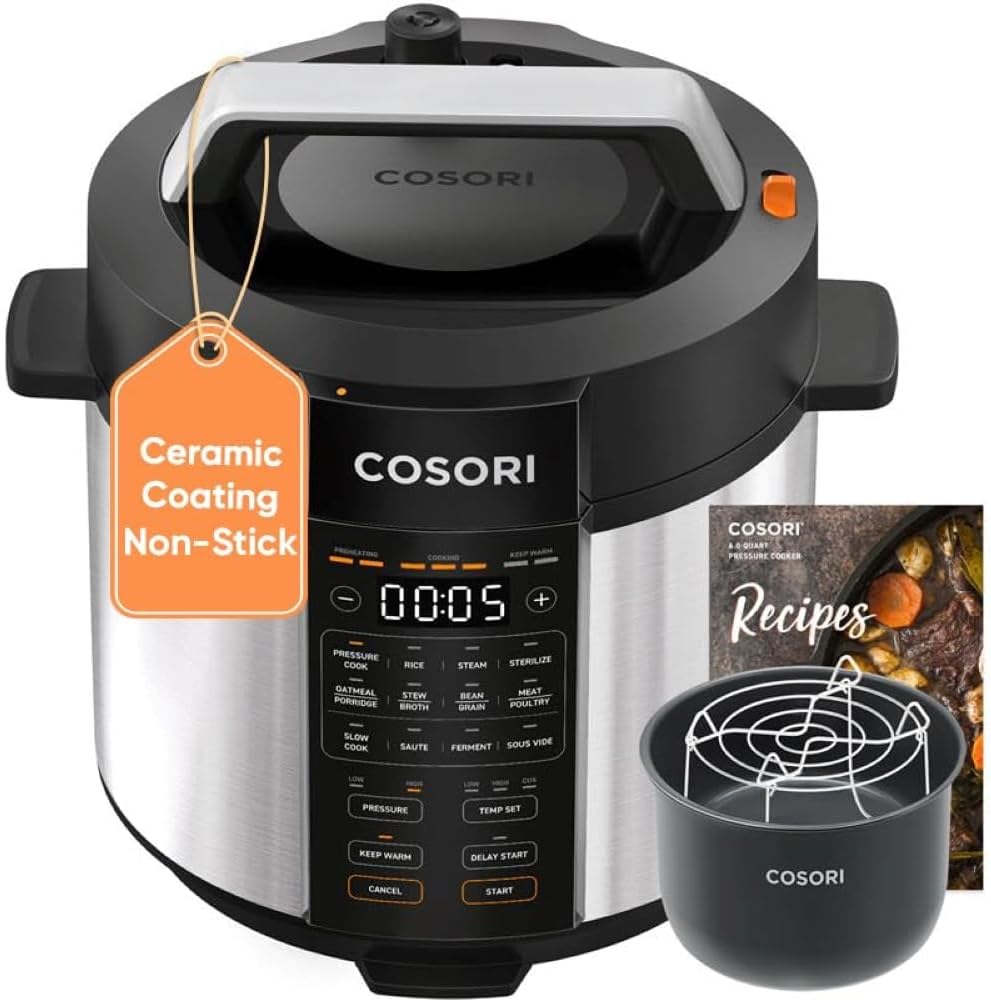
Cosori Pressure Cooker, 6 qt with ceramic-coated pot
Same capacity as the base Instant Pot for close to the same money, with a ceramic-coated inner pot instead of bare stainless. It also holds the highest star average on this page.
Watch outCeramic nonstick wears out. The inner pot is a consumable in a way a stainless one is not.

DUMOS 16-in-1 Pressure Cooker, 6 qt, ceramic pot
Six quarts and a ceramic inner pot for under fifty dollars, which is the cheapest route here to the same sealed-pot hardware everything else on this page uses.
Watch out1,015 ratings is the thinnest record here, too new to show a failure pattern, and sixteen presets is still one heating element.
Midea 12-in-1 Pressure Cooker, 6 qt
Six quarts and a stainless body at the same asking price as the base Instant Pot, with twelve presets instead of seven. The presets are the only thing that differs, which is the point of the paragraph above.
Watch outIt asks Instant Pot money without Instant Pot's rating history behind it.

Instant Pot Duo Mini, 3 qt
Half the capacity of the 6-quart Duo and, at the prices we last saw, more money. It makes sense only if counter space is the binding constraint rather than budget.
Watch outIts rating count is rolled up across variants, not an independent record for the 3-quart.

Instant Pot Duo Plus, 6 qt (9-in-1)
The same six-quart body as the Duo with two more preset programs and a different control panel. Worth the step up only if you already know which two programs you want.
Watch outThe struck-through $139.99 makes the step up look larger than it is.
Instant Pot Rio Wide, 7.5 qt
Seven and a half quarts in a wide body, which is the shape that takes a bigger roast rather than just a taller stack of it. The WhisperQuiet steam release is the other thing the money buys.
Watch outA larger pot takes noticeably longer to come up to pressure, so short cooks get slower, not faster.

Presto 02152 Digital Pressure Canner, 17 qt
Not a multicooker. A 17-quart digital canner, which is the appliance you need to can low-acid food safely, because a boiling-water bath does not reach the temperature that job requires.
Watch outFour times the price of anything else here and far too large for weeknight cooking. Buy it to can, not to cook.
What actually matters here
- 01The "X-in-1" count is preset buttons on one heating element. Pressure cook, sauté and keep warm cover nearly all real use; the yogurt and sterilize modes mostly go untouched.
- 02Six quarts is the sweet spot. Three-quart models are for one or two people, or for cooking a side while the big pot is busy, and they rarely cost proportionally less.
- 03Inner pots are either stainless or ceramic-coated. Stainless lasts indefinitely and browns well but sticks; ceramic releases food easily and wears down over a few years of use.
- 04A pressure cooker and a pressure canner are not interchangeable. Canning low-acid food safely needs a vessel rated and instrumented for it, and multicookers are generally not.
- 05Pressure cookers do not cook instantly. Add ten to fifteen minutes on either end for the pot to come up to pressure and for the pressure to drop before the lid opens.
- 06Sealing rings absorb odors and are the usual first replacement part. Keeping a second ring for savory versus sweet cooking is far cheaper than replacing the cooker.
Questions people actually ask
- Is a 6-quart or an 8-quart pressure cooker better for a family?
- Six quarts handles most family cooking: a whole chicken, a large batch of chili, four to six portions. Eight quarts is for batch cooking or jar-sized jobs, and the bigger pot takes noticeably longer to come up to pressure.
- Does a pressure cooker actually save time?
- On long-cooking food, yes. Dried beans, tough cuts and stock come out in a fraction of the time. On quick food it often does not, because you add preheat and depressurize time to whatever the recipe says. A twelve-minute pressure cook can be a thirty-minute job.
- Can I use an electric multicooker for canning?
- Not for low-acid foods like vegetables, meat or stock. Safe canning of those needs a pressure canner that holds a verified temperature for a set time, and most multicookers are not rated or instrumented for it. High-acid foods such as jam can be done in a water bath instead.
- Can you leave an electric pressure cooker unattended?
- They are built for it. The cooker regulates its own pressure and cuts heat if a sensor trips. It does need clearance above the valve for the steam release, so do not run it tucked under a cabinet you care about.