Espresso machines under the café-habit threshold
Two of these eight are the same Breville in a different color, and the rest comes down to whether you actually want to pull shots by hand.
We earn a commission if you buy through our links, at no cost to you. It never decides what makes the list.
Side by side
The picks

Breville Barista Express (Black Sesame)
27,882 ratings at 4.4 stars, pooled with the identical machine in another finish. This is the tier where a home espresso setup stops being a novelty purchase, and the grinder is built in.
Watch outThe $699.95 list is the seller's own, and 4.4 stars is good rather than exceptional for the money.

Chefman Crema Deluxe, grinder and double boiler
A built-in grinder with 30 settings and a double boiler, for a little over half the Breville. By this page's own argument — that the grind decides the coffee — it is the cheapest machine here that solves the real problem.
Watch out4.1 stars is the lowest average on this page, on 3,315 ratings, which is the price of being first to a spec at this money.
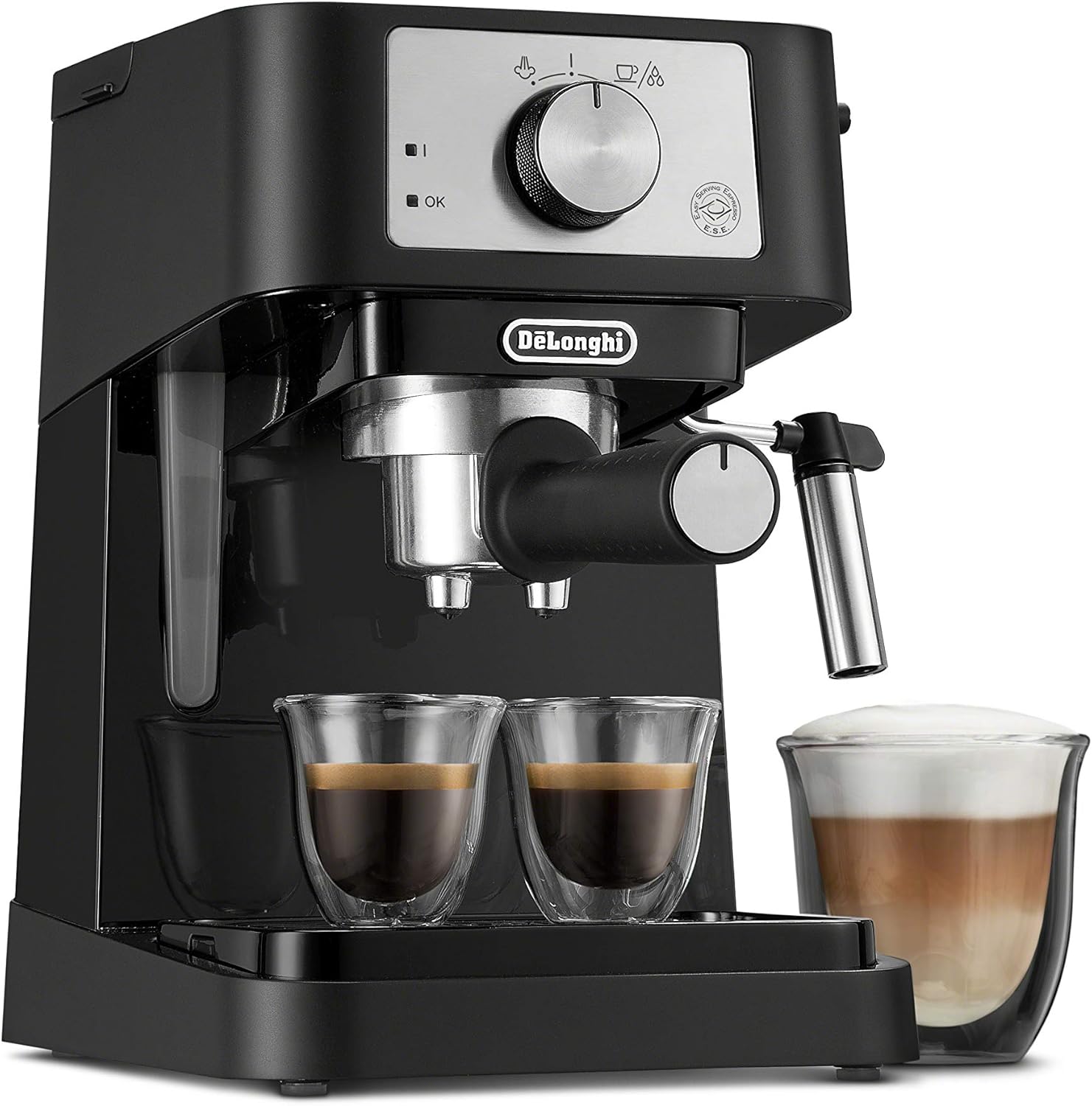
De'Longhi Stilosa, manual with steam wand
Under $100 with a manual milk frother, which makes it the cheapest way to find out whether you'll really make espresso at home or drift back to drip inside a month. Spend what you save on a grinder.
Watch out4.2 stars across 13,838 ratings is a settled figure rather than an early one, and a compact manual machine asks more of the person using it.
Nespresso Vertuo Pop+ by De'Longhi
The one machine here that takes capsules rather than ground coffee, so none of the grinder advice above applies to it. That is the trade: no skill required, and the coffee is whatever the pod is.
Watch out1,665 ratings is the thinnest record here, and the running cost is per capsule rather than per bag of beans.
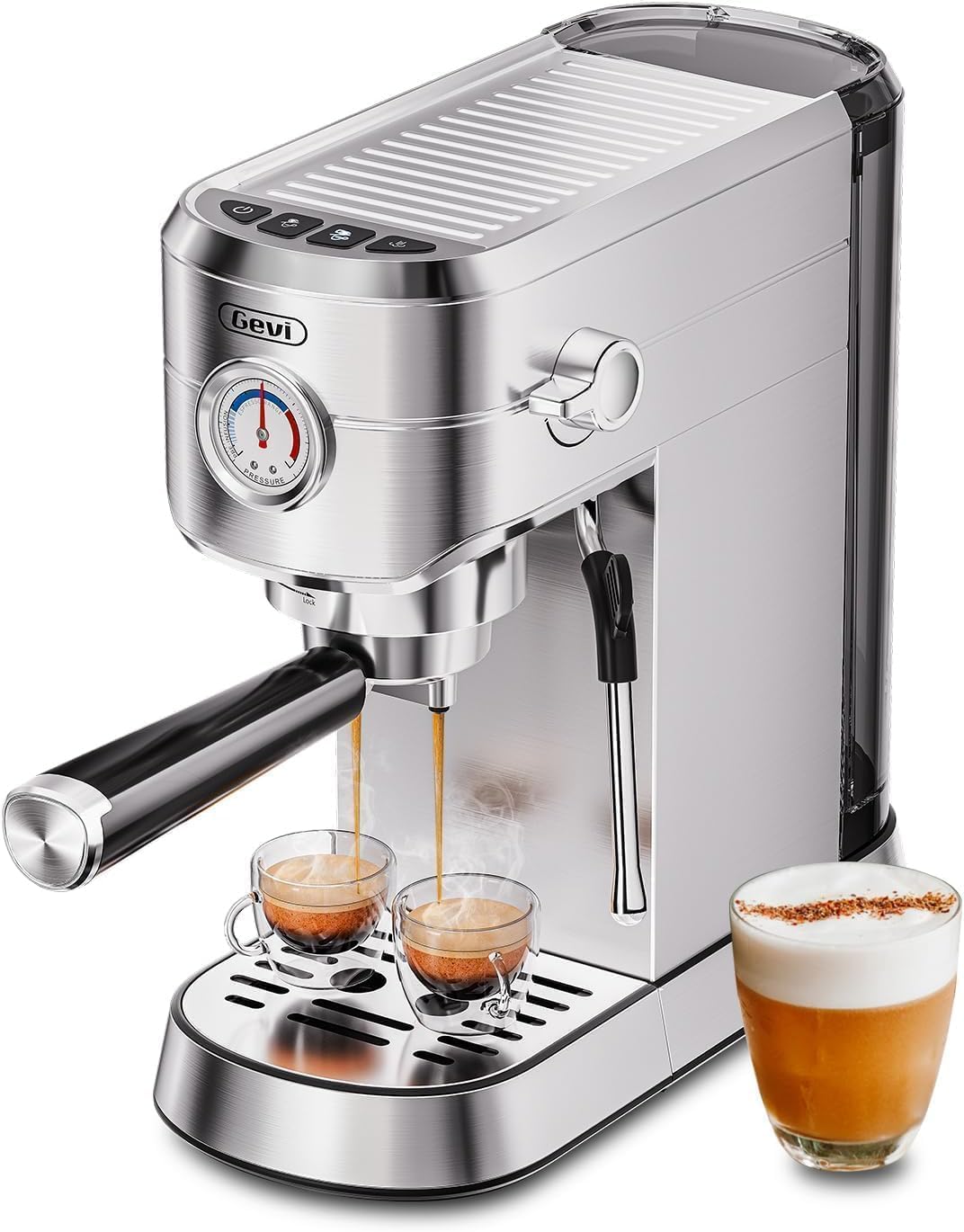
Gevi 20 Bar compact espresso machine
A compact manual machine about twenty-five dollars over the De'Longhi, rated a shade higher. The 20-bar figure in the title is the pump's maximum and not what reaches the coffee, so read it as a class label.
Watch out3,777 ratings is a modest record, and nothing in the listing explains the gap over the cheaper De'Longhi.
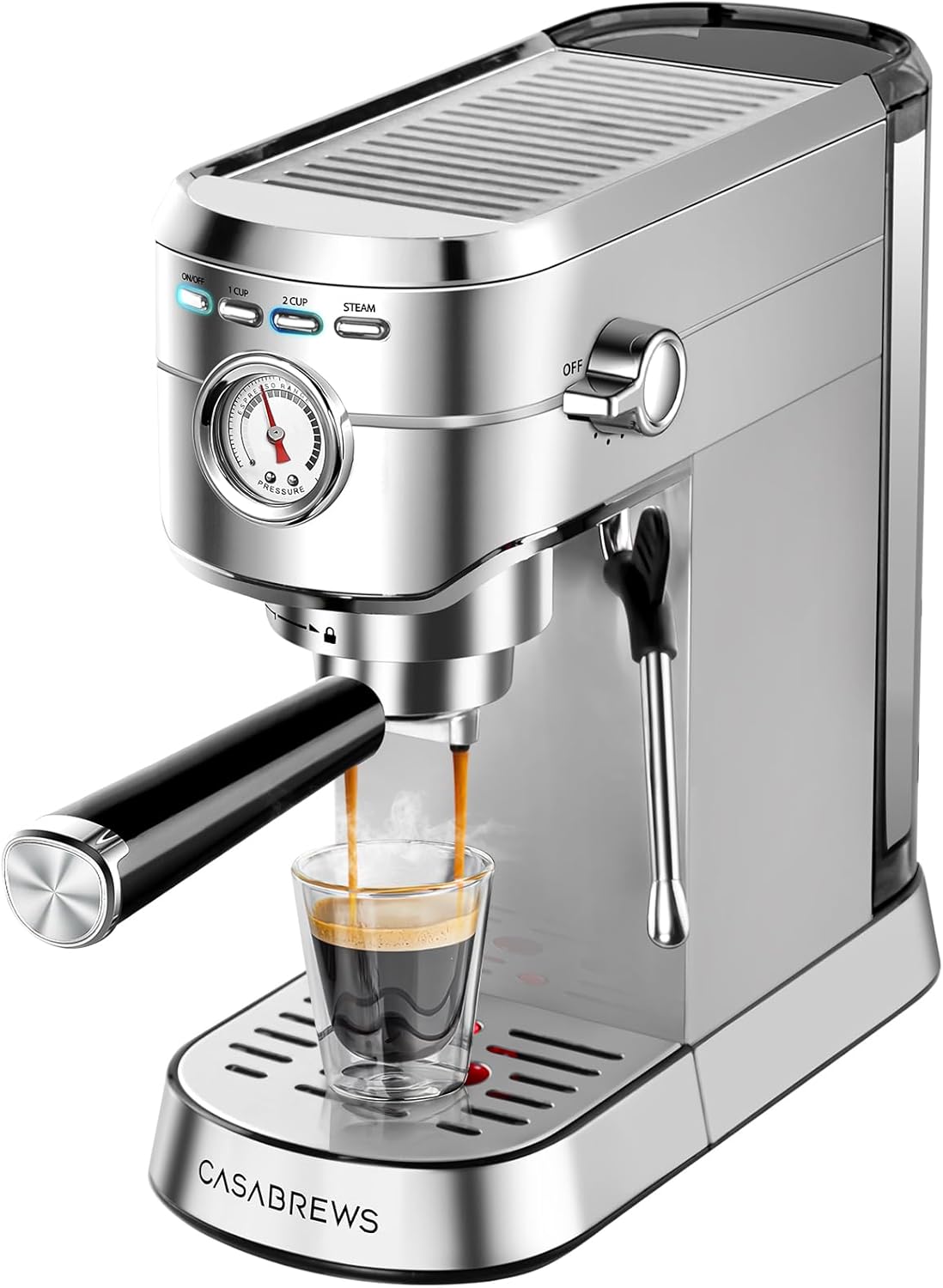
CASABREWS CM5418, compact with steam wand
Sits about $40 above the De'Longhi with a steam wand and a compact body, and nothing in the listing explains the gap. It's on the page because 8,056 ratings at 4.3 is an established record, and it rates a shade above the cheaper De'Longhi.
Watch outNo list price to anchor it, and the cheaper machine on this page does the same job.
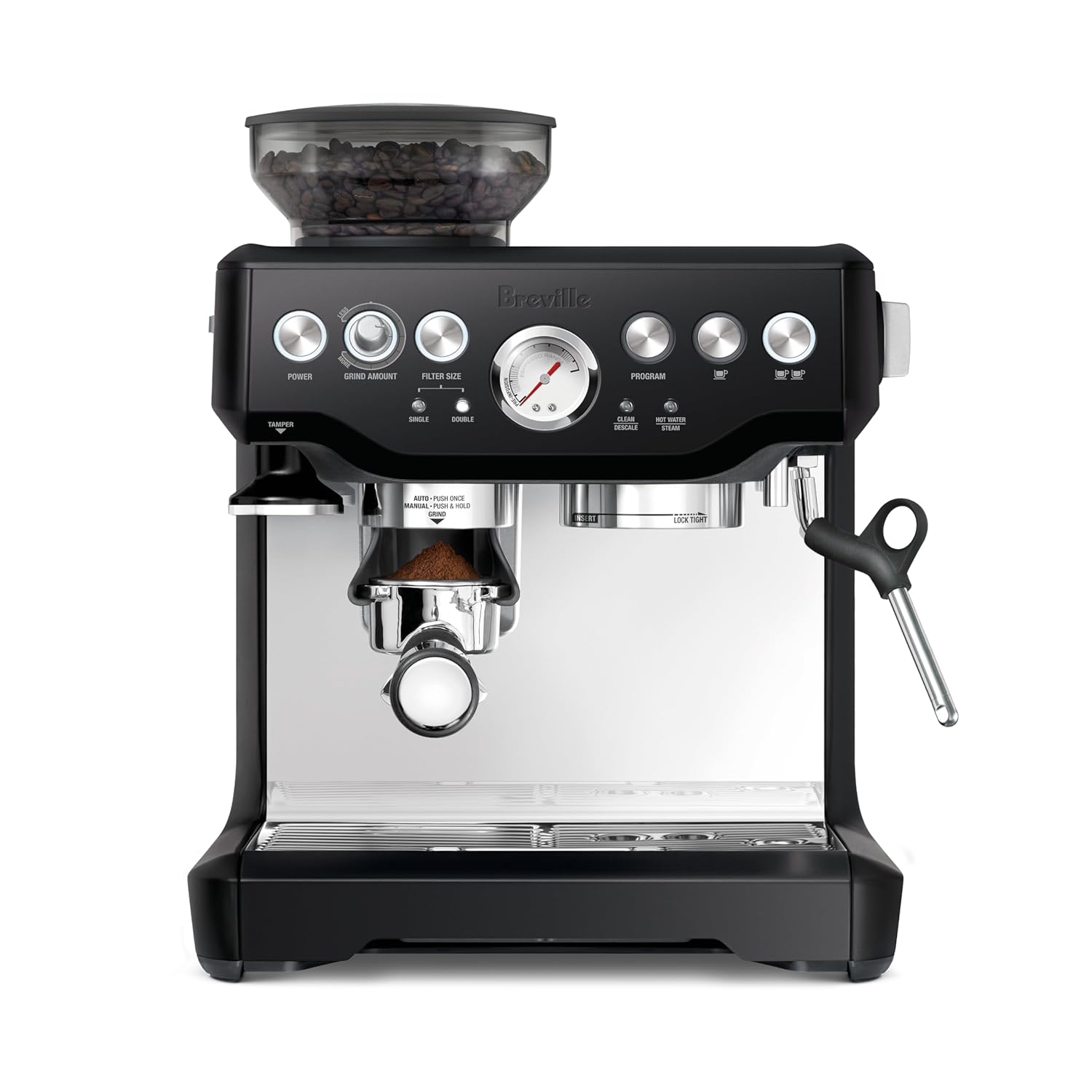
Breville Barista Express (Black Truffle)
The same machine as the pick at the top in a different finish, at the same asking price, sharing the same 27,882 ratings. There is nothing to choose between the two except color and which one dips first.
Watch outColor variants drift apart in price, so check both listings before ordering either one.

Ninja Luxe Café Premier, 3-in-1
Espresso, drip and cold brew in one unit for the same money as the Breville, replacing two appliances instead of one. Worth it only if you genuinely drink drip coffee as well as espresso.
Watch out2,524 ratings is a short history, so there's no known failure pattern on this one yet, good or bad.
What actually matters here
- 01The grinder decides how good the coffee is. Espresso needs a fine, consistent, finely adjustable grind, and a blade grinder or a supermarket pre-ground bag will bottleneck any machine at any price.
- 02A machine with a grinder built in costs more up front and less than buying both separately. It also means one appliance's failure takes out both, which is the trade-off nobody mentions.
- 03Pressurized and non-pressurized baskets are different products in the same shape. A pressurized basket forces crema out of almost any grind, which makes a cheap machine forgiving and also caps how far you can improve. A non-pressurized basket rewards a good grinder and punishes a bad one.
- 04A steam wand is a skill, not a feature. Automatic frothers are more consistent for a beginner, while a manual wand makes better microfoam once you've practiced on a few liters of milk.
- 05Capsule machines are a different purchase. There is no grind to dial in and no skill to learn, and the cost per cup is set by whoever sells the pods rather than by the bean market.
- 06Budget for what isn't in the box. A tamper, a scale and fresh beans are what separate good shots from bad ones on the same machine, and none of them usually ship with it.
Questions people actually ask
- Do I need a separate grinder for espresso?
- If the machine doesn't have one built in, yes. Espresso needs a much finer and more consistent grind than drip, and pre-ground coffee sold for espresso comes at one fixed grind size you can't dial in. A burr grinder is the single biggest upgrade in the chain.
- Is 15 or 20 bars of pressure better?
- Neither. Espresso extracts at around nine bars, and the bar figure on a box describes the pump's maximum rather than what reaches the coffee. Treat it as a marketing number and ignore it when comparing machines.
- Does a home espresso machine actually save money?
- Run the math on your own habit rather than on the machine's price. A daily $5 latte is about $150 a month, so a $500 machine pays for itself inside a year if it really replaces the shop, and never if it sits unused after week three. Beans and milk are an ongoing cost either way.